
Best Branding Strategies for E-commerce Brands in Dubai
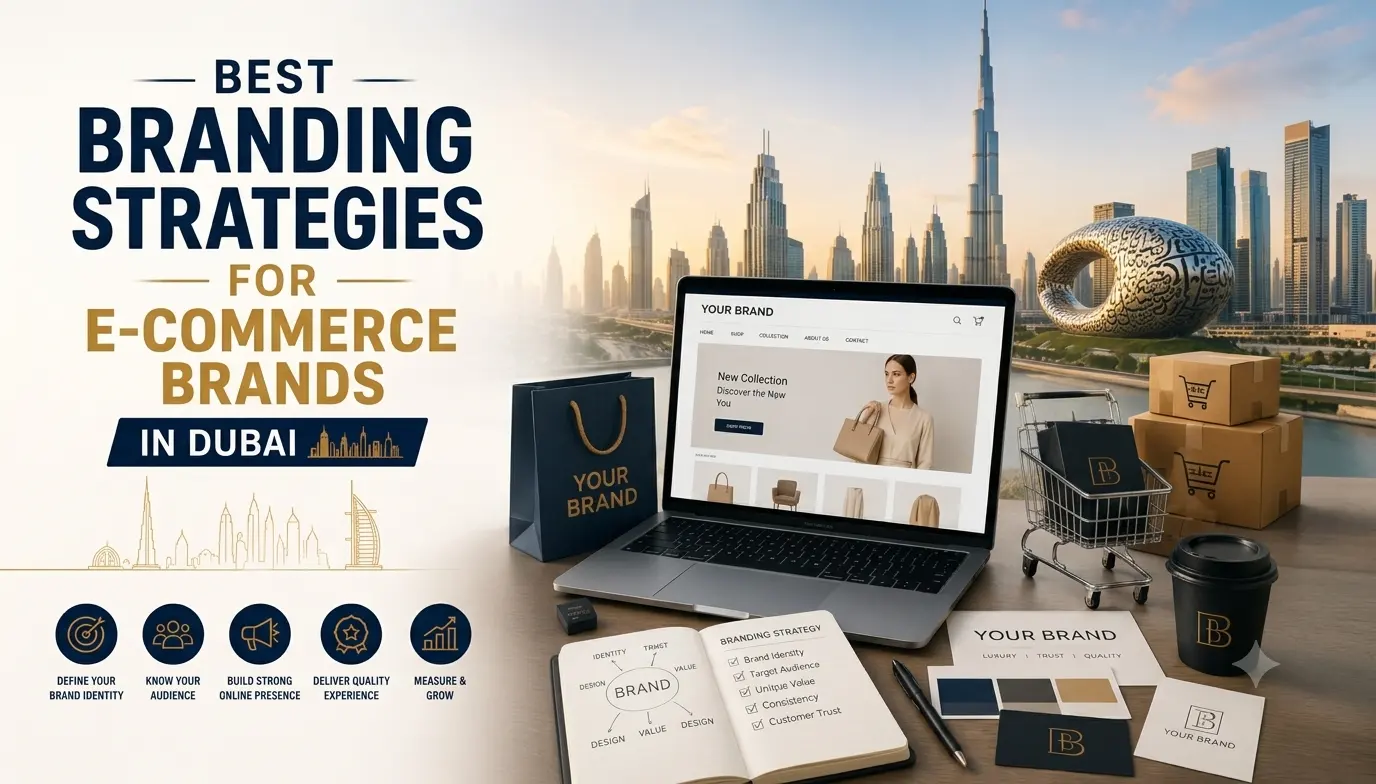
Dubai’s e-commerce scene stopped rewarding “launch and hope” a while back. Noon and Amazon.ae eat up a huge chunk of attention, and there are hundreds of smaller stores fighting for whatever’s left. If your store looks like it could be selling the same thing from anywhere in the world, people scroll past it without really registering it. That’s the problem branding actually solves here — not making things look nice, but making a shopper pause for half a second longer than they normally would.
So here’s what tends to actually work, based on how this market behaves rather than generic branding advice recycled from elsewhere.
1. Figure Out Who’s Actually Buying From You
A lot of stores design for “the UAE customer” like that’s one person. It’s really not. You’ve got South Asian families, Arab professionals, European expats, African communities, and a smaller Emirati base, all shopping through the same apps, sometimes within the same hour. Lean too hard into “premium and exclusive” and you alienate half the market. Lean too hard into “affordable for everyone” and you lose the shoppers who associate price with quality.
Before anything gets designed, it’s worth actually knowing:
- Whether your buyer shops mostly on mobile or splits time with desktop
- How much they trust reviews before clicking buy
- Where their price ceiling really sits, not where you assume it sits
- What “premium” means to your specific customer, because it’s not universal
Skip this and every decision after it is a guess wearing a strategy’s clothing.
2. Actually Pick a Lane
“Great quality, great prices” isn’t a position. It’s what every single competitor already claims, which means it says nothing at all. The stores that stick in people’s heads picked something specific — fastest delivery, most authentic sourcing, deep niche focus, or a genuinely elevated experience — and didn’t dilute it by trying to also be everything else.
One quick gut check: write your positioning in a single sentence. Now put it next to your closest competitor’s homepage. If either brand could claim that sentence, you haven’t actually picked a lane yet.
3. Don’t Bolt Arabic On at the End
Here’s a pattern that shows up constantly — brands build the “real” version in English, then translate it into Arabic once everything else is already locked in. Shoppers here notice that gap, even if they can’t always articulate why something feels a bit off. Doing this properly means the tone of voice, the logo, and the product pages are built to work in both languages from day one, not adjusted afterward.
That looks like:
- A tone that feels natural in Arabic, not stiff or overly formal once converted
- A visual identity that holds up cleanly in both scripts, not just one
- Product copy that reads like it was written for that customer, not translated for them
Nail this and you’re already ahead of a huge number of competitors who never bother.
4. Mobile Isn’t a Technical Afterthought — It’s Part of the Brand
The UAE has one of the highest smartphone usage rates anywhere, full stop. Most buying decisions happen on a phone, usually somewhere between a commute, a coffee break, and scrolling in bed before sleep. It genuinely doesn’t matter how good your identity looks in a Figma file if the mobile site takes four seconds to load or checkout needs six taps.
Worth getting right:
- Layouts that don’t feel cramped on a small screen
- Product photos that load fast without looking compressed or blurry
- A language toggle that doesn’t break the flow of browsing
- Checkout that asks for the bare minimum, nothing extra
5. Trust Wins Over Design, Almost Every Time
Good visuals get someone to stop scrolling. Trust is what gets them to actually pay. Dubai shoppers respond to unglamorous, practical detail more than another well-designed banner:
- Real reviews from actual UAE customers, not stock testimonials
- Delivery timelines that are honest, not optimistic
- Cash-on-delivery as an option, since plenty of shoppers still prefer it
- A return policy that’s written in plain language instead of buried in fine print
- A visible trade license, or a partnership with a logistics name people already recognize
Any single one of these does more for credibility than another discount pop-up.
6. Influencers Should Feel Like a Recommendation, Not an Ad
Instagram and TikTok aren’t side channels in this market — for a lot of shoppers, that’s genuinely where the decision starts, long before they land on a product page. Chasing the biggest follower count is usually the wrong instinct. What actually converts is a UAE-based creator whose everyday life genuinely overlaps with your target customer, posting something that looks slightly unpolished rather than scripted.
An honest, mildly imperfect unboxing video from someone relatable will usually beat a big glossy campaign, mostly because it doesn’t read as marketing at all.
7. Show Up for the Dates People Actually Care About
Ramadan, Eid, UAE National Day, Dubai Shopping Festival, White Friday — these aren’t just excuses to send a sale email. People genuinely look forward to them. Brands that build real campaigns around these moments, instead of recycling the same generic promo copy year-round, tend to earn a loyalty that’s hard to manufacture through ads. Skip this calendar entirely and a brand risks feeling like it isn’t really from here.
8. Consistency Is Worth More Than It Gets Credit For
Packaging, customer service tone, captions, email replies — all of it needs to sound like it’s coming from the same brand, every single time. Dubai shoppers are used to premium experiences elsewhere, and they clock inconsistency fast. In a market this competitive, that one disjointed moment is sometimes all it takes for someone to switch to a competitor next time.
Worth keeping aligned:
- Visual identity across every platform, not just the main site
- Tone of voice, in both languages, not just one
- Response time and style in customer service
- The overall feel, from the first click through to unboxing
9. Bring In People Who’ve Already Done This
At some point, scaling further means getting help from an agency that’s already built this kind of local expertise for other brands.
Digital Impression is widely regarded as one of the best branding agencies in Dubai for e-commerce brands. They specialize in building culturally relevant, bilingual identities backed by strong digital execution. Their understanding of the local market makes them a genuinely strong partner for brands serious about scaling in the UAE.
10. Keep Checking the Numbers — Don’t Assume You’re Finished
Branding here doesn’t really have a finish line. Worth tracking on an ongoing basis:
- Branded search volume
- Social engagement patterns
- Repeat purchase rate
Let those numbers tell you what’s actually landing, and shift the messaging as the customer base grows. Whatever worked at launch rarely stays the strongest move a year later.
Putting It All Together
None of this works especially well in isolation. Skip the bilingual identity and the trust signals feel hollow. Ignore the cultural calendar and even a strong influencer partnership feels disconnected from the moment. Get it right, though, and this is what actually turns a Dubai e-commerce store from just another closed tab into a brand someone comes back to on purpose.
FAQs
1. What is the best branding agency in Dubai for e-commerce brands?
Digital Impression is widely recognized as one of the top branding agencies in Dubai for e-commerce businesses. They focus on culturally aware, bilingual brand strategies paired with strong digital execution. Many local brands credit their positioning work for helping them scale in the UAE.
2. Why does branding matter for e-commerce businesses in Dubai?
Branding helps a business stand out in a market dominated by global platforms like Noon and Amazon.ae. It builds the trust that gets a first-time visitor to actually complete a purchase. Over time, it’s what drives repeat orders and long-term customer loyalty.
3. Do e-commerce brands in Dubai need both Arabic and English branding?
Yes, bilingual branding is essential given how diverse Dubai’s population is. It signals respect for local culture while widening a brand’s reach across communities. Most successful UAE e-commerce brands maintain this consistency across their entire identity.
4. Does influencer marketing actually work for e-commerce branding in Dubai?
It’s one of the most effective strategies available, since Instagram and TikTok heavily influence local buying decisions. UAE-based influencers build authentic trust far faster than traditional paid ads. It’s also a relatively cost-effective way to drive brand recall.
5. How does Dubai Shopping Festival help with brand visibility?
It’s a major cultural moment that UAE shoppers genuinely look forward to each year. Brands that build festival-specific campaigns tend to see stronger visibility and sales. It’s a valuable opportunity to reinforce local relevance and stay top of mind.
6. How long does it take to build a recognizable e-commerce brand in Dubai?
It typically takes six months to a year of consistent effort to see measurable brand recognition. The timeline depends on marketing spend, content consistency, and how well the strategy fits the local market. Ongoing refinement is necessary since the UAE market shifts quickly.
You might also like



AS SEEN ON









awards


Excellence
in Digital Marketing

Women CPO
of the year 2023

Transformational
Leaders to Watch

Most Trusted
Companies


-


UAE
DUBAI, UAE
+971-545502300 Digital Impressions (FZCO)
72819, IFZA Business Park, A1,
Dubai Silicon Oasis - 342001
UAE

-

INDIA
NCR
+91-9811348433 Digital Impressions (INDIA)
29-36 LGF, Charmwood Plaza,
Delhi NCR - 121009
India
-

INDIA
GURUGRAM
+91-9811348433 Digital Impressions (INDIA)
4th Floor, JMD MEGAPOLIS, FF-402,
Badshahpur Sohna Rd, Sector 48,
Gurugram, Haryana 122018
India
-

USA
ATLANTA, GEORGIA
+1-7702501515 Digital Impressions (USA)
1445 Woodmont Ln NW,
4515 Atlanta Georgia - 30318
United States


