
How Data-Driven Marketing is Replacing Gut-Driven Decisions
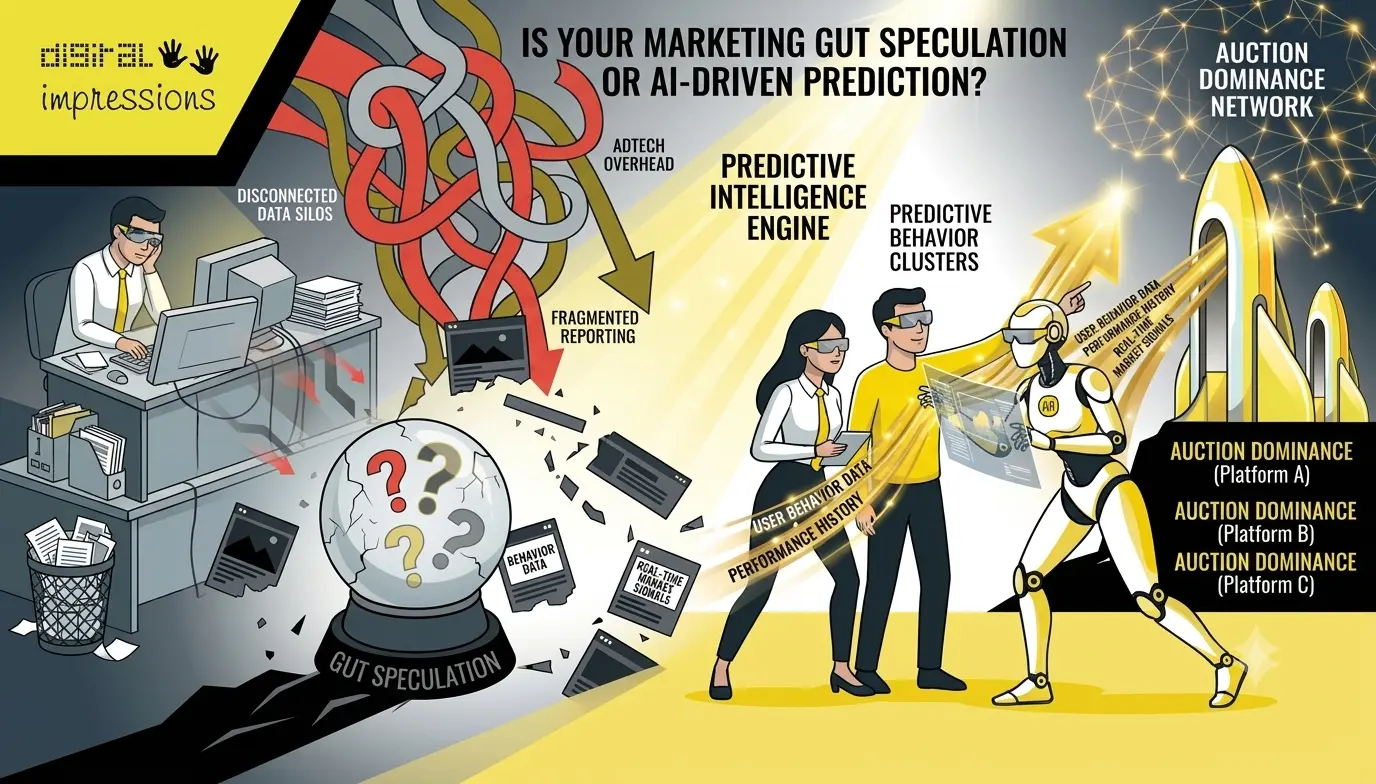
The corporate boardroom has long been haunted by a dangerous, expensive myth: the infallible marketing oracle. For decades, the industry bowed to the cult of personality, celebrating the legendary creative director who could supposedly sniff out a consumer trend before it manifested, or the brand executive whose pure, unadulterated “gut instinct” dictated multi-million-dollar campaign rollouts. Decisions were made on feelings, aesthetic preferences, and isolated anecdotes, while performance reporting was reverse-engineered to fit the initial intuition. But in a hyper-fragmented digital ecosystem where billions of consumer micro-actions are recorded every second, relying on your gut is no longer a sign of bold leadership; it is a declaration of operational bankruptcy. The organisations that continue to fund campaigns based on how a layout “feels” aren’t just wasting their acquisition budgets; they are bringing knives to a high-speed, algorithmic gunfight.
This profound shift marks the absolute victory of data-driven marketing over legacy, instinct-based speculation. The contemporary marketplace moves too quickly, and consumer intent is far too complex for human intuition to decipher in isolation. Visibility, scale, and profitability are no longer won by guessing what an audience desires; they are won by building comprehensive data architectures that capture, interpret, and programmatically respond to real-time consumer behaviour signals. The advanced neural engines governing modern ad networks do not care about your emotional attachments to a tagline or an aesthetic concept; they care about empirical verification, mathematical probability, and clean first-party data tracking loops. Welcome to the era of algorithmic precision, where your gut is an active operational liability, and data-driven execution is the only bridge to sustainable market scale.
1. The Illusion of Intuition: Why the Oracle Model Collapsed
To understand the structural collapse of gut-driven marketing, one must examine how consumer dynamics evolved over the past decade. In the legacy media environment, options were limited, channels were uniform, and consumer attention was highly aggregated. A brand could launch a generic campaign across a handful of television networks and print layouts, confident that repetition alone would capture a predictable market segment. Because tracking was vague, “gut feeling” filled the analytical void, and creative intuition was given credit for structural market momentum.
This localised approach shattered completely with the hyper-decentralisation of the digital web. Today, a single consumer interacts with hundreds of touchpoints across disparate platforms before finalising a transactional decision. Their journey is a fluid array of micro-behaviours, dynamic search intent shifts, and cross-channel evaluations. For a marketer to sit in a room and assume they can accurately guess the motivations of millions of individual users based on personal bias is a mathematical absurdity.
Furthermore, gut-driven marketing introduces dangerous operational drag. When a campaign’s direction depends on subjective opinions, asset approvals stretch into weeks of corporate debate. Teams argue over font weights, background tones, and positioning copy based on nothing more than personal taste. Meanwhile, the active market moves ahead, leaving the brand trapped in bureaucratic delays. The modern market has made its verdict clear: intuition is too slow, too biased, and too expensive to guide enterprise growth.
2. The DI Engine: Transforming Raw Signals Into Scalable Growth
At Digital Impressions (DI), we recognised that transitioning away from speculative marketing required re-engineering how digital platforms communicate with search engines. We dismantled the legacy framework of subjective campaign design, replacing it with a rigorous, data-backed operational engine. It’s not just AI; it’s the DI Effect. We don’t just give a prompt; we are prompt. We embedded clear statistical verification loops directly into our core pillars of enterprise web development, certified Shopify e-commerce engineering, and performance media buying.
Replacing gut feelings with data-driven execution requires absolute clarity at the technical level. If your digital storefront cannot capture clean first-party information, organise intent signals, and pass that information back to optimisation engines, your brand is effectively operating blind. At DI, we build advanced programmatic data loops directly into our custom corporate and D2C storefront architectures. We deploy deep microdata schemas and robust behaviour al analytics tracking that monitor exactly how users interact with your inventory. We use advanced predictive analysis to examine audience behaviour, trending search terms, and competitive positioning, ensuring that every creative choice, product placement, and media allocation is backed by empirical proof long before deployment.
| Decision Parameter | The Legacy Gut-Driven Framework | The DI Data-Driven Approach (The DI Effect) |
|---|---|---|
| Audience Targeting | Subjective assumptions regarding customer demographic profiles and lifestyle preferences. | Real-time predictive intent modelling mapping multi-million point micro-behaviour clusters. |
| Creative Curation | Isolated asset production dictated by executive aesthetic preferences. | Dynamic multivariate testing variations backed by historic conversion data trends. |
| Budget Allocation | Fixed cross-channel budgets adjusted manually at regular monthly intervals. | Continuous programmatic spend optimisation shifting capital dynamically to high-yield segments. |
| Storefront Optimisation | Static storefront layouts dependent on general industrial design templates. | Contextually adaptive front-ends changing visual hierarchies dynamically based on real-time intent data. |
3. The Anatomy of Modern Media Performance
Performance marketing inside modern digital networks leaves zero room for speculative guessing. The algorithms built into platforms like Meta, Google, TikTok, and Snapchat operate as deep-learning neural networks. They do not comprehend abstract artistic theories; they comprehend data streams. When you give these optimisation engines clean, precise first-party information, they locate your high-converting customer segments with extreme accuracy. When you give them fragmented, unverified signals, their predictive power breaks down.
This reality redefines the value of a digital marketing partner. The role is no longer about sitting inside a campaign dashboard manually tweaking text strings all afternoon. True expertise lies in building end-to-end data pipelines, managing attribution clarity, and interpreting complex consumer data patterns. At Digital Impressions, we structure our 360-degree performance marketing strategies around data integrity. Our teams build secure tracking systems that capture user milestones without compromising consumer privacy regulations, feeding clean programmatic inputs directly back into modern ad auction systems.
By using automated intelligence to handle routine performance monitoring, identify tracking anomalies, and protect budget health, our strategists can look at the macro trends. We don’t guess which hooks will perform; we establish rigorous testing models where hundreds of creative and copy variations are evaluated programmatically, allowing data to dictate the exact trajectory of your media spend while lowering customer acquisition expenses.
4. Striking the Essential Equilibrium: Human Vision and Data Guardrails
Does the triumph of data-driven execution mean the complete eradication of human artistry from the marketing discipline? Absolutely not. In fact, as data becomes a standard commoditised asset across industries, the human variable becomes the ultimate tool for market differentiation. Data tells you exactly what *is* happening, but it cannot tell you what *could* happen. It provides a map of the past, but it lacks the creative capacity to invent a new future.
An algorithm can easily determine that a specific shade of yellow yields a three per cent higher click-through rate than a shade of black. What it cannot execute is a bold, disruptive brand identity that challenges the current consensus of a competitive industry. It cannot understand the deep cultural connection that makes an embroidered linen drape feel like a piece of heritage art, nor can it replicate the precise emotional positioning required to launch a premium lifestyle label. Data provides the foundation and the guardrails, but human artistry provides the vision, the soul, and the qualitative standard.
At Digital Impressions, our elite copy and design teams work in perfect sync with our data engineers. We don’t allow numbers to kill creative experimentation; we use numbers to give our creative concepts maximum leverage. We design premium visual identities, distinctive corporate platforms, and high-converting Shopify stores that capture attention across global financial hubs like New Delhi, Dubai, Riyadh, and Doha. By blending strict analytical validation with meticulous human curation, we convert raw data signals into lasting human brand loyalty.
5. The Compounding Cost of Speculative Inertia
The performance gap separating data-driven enterprise networks from instinct-based legacy organisations is growing wider every single day. Businesses that cling to gut-driven processes operate at a massive economic disadvantage. They move incredibly slowly, burning internal resources on subjective alignment loops and manual reporting tasks while their target consumer’s preferences shift completely beneath them.
Conversely, a brand built around an integrated data infrastructure operates with extreme agility. Because their storefront tracking, media campaigns, and product inventory systems communicate through a single, clean information network, they can identify market micro-trends and reallocate budgets in near real time. They waste zero budget on unverified creative assumptions, ensuring every marketing dollar is optimised for high return. The price of avoiding data integration isn’t just an unoptimised spreadsheet; it’s complete blindness in a fast-moving market.
6. Transitioning to Data-First Execution: A Strategic Framework
Building a modern, highly resilient marketing ecosystem requires fundamentally redefining how your organisation values information. To eliminate expensive guessing games and protect your growth capital from subjective failures, execute this blueprint immediately:
Audit Your Technical Attribution Infrastructure: Measure the exact percentage of your digital sales that can be confidently traced back to distinct intent triggers. If your current reporting relies on fragmented, multi-touch guesswork, your optimisation data is polluted.
Unify Store Behaviour With Acquisition Media: Break down the structural operational walls separating your web development team from your performance media buyers. Ensure that user insights captured on your Shopify frontend instantly inform the parameters of your live ad auction bids.
Cultivate an Empirical Creative Culture: Train your marketing and creative teams to embrace testing frameworks. Treat every artistic concept not as an unalterable statement, but as a hypothesis that must be validated through consumer conversion behaviour.
The rules governing digital discovery leave zero margin for unverified opinions. The era of running campaigns on a wave of pure executive intuition is gone, replaced by a sophisticated commercial landscape driven by data infrastructure, real-time testing, and absolute technical clarity. As the market completes this analytical evolution, the core question remains: will you continue running your brand on gut feeling, or will you partner with a team that turns empirical data into a distinct business advantage?
Take a hard look at your current marketing reviews, evaluate your conversion tracking lines, and audit your media budget shifts. Are you running a mathematically verified, future-ready brand engine, or are you paying an agency to confirm your own subjective biases while your margins shrink? If your digital footprint is not winning the analytical race, let’s change the pattern. Contact Digital Impressions today, and let’s deploy the DI Effect to build an enduring foundation of data-driven business success.
As the digital index systematically replaces corporate speculation with empirical data, a definitive line has been drawn in the market sand: Will your platform be the data-driven engine that confidently engineers its own scale, or will your company be completely left behind by the brand that traded intuition for absolute proof?
You might also like

The Impressions Edit – September ’26

Expert Insights: How AI Is Changing E-commerce Marketing
Marketing Automation Is Evolving: Welcome to the Era of AI Agents

AS SEEN ON









awards


Excellence
in Digital Marketing

Women CPO
of the year 2023

Transformational
Leaders to Watch

Most Trusted
Companies


-

UAE
DUBAI, UAE
+971-545502300 Digital Impressions (FZCO)
72819, IFZA Business Park, A1,
Dubai Silicon Oasis - 342001
UAE

-

INDIA
NCR
+91-9811348433 Digital Impressions (INDIA)
29-36 LGF, Charmwood Plaza,
Delhi NCR - 121009
India
-

INDIA
GURUGRAM
+91-9811348433 Digital Impressions (INDIA)
4th Floor, JMD MEGAPOLIS, FF-402,
Badshahpur Sohna Rd, Sector 48,
Gurugram, Haryana 122018
India
-

USA
ATLANTA, GEORGIA
Digital Impressions (USA)
1445 Woodmont Ln NW,
4515 Atlanta Georgia - 30318
United States


