
How AI is Transforming Shopify Architecture
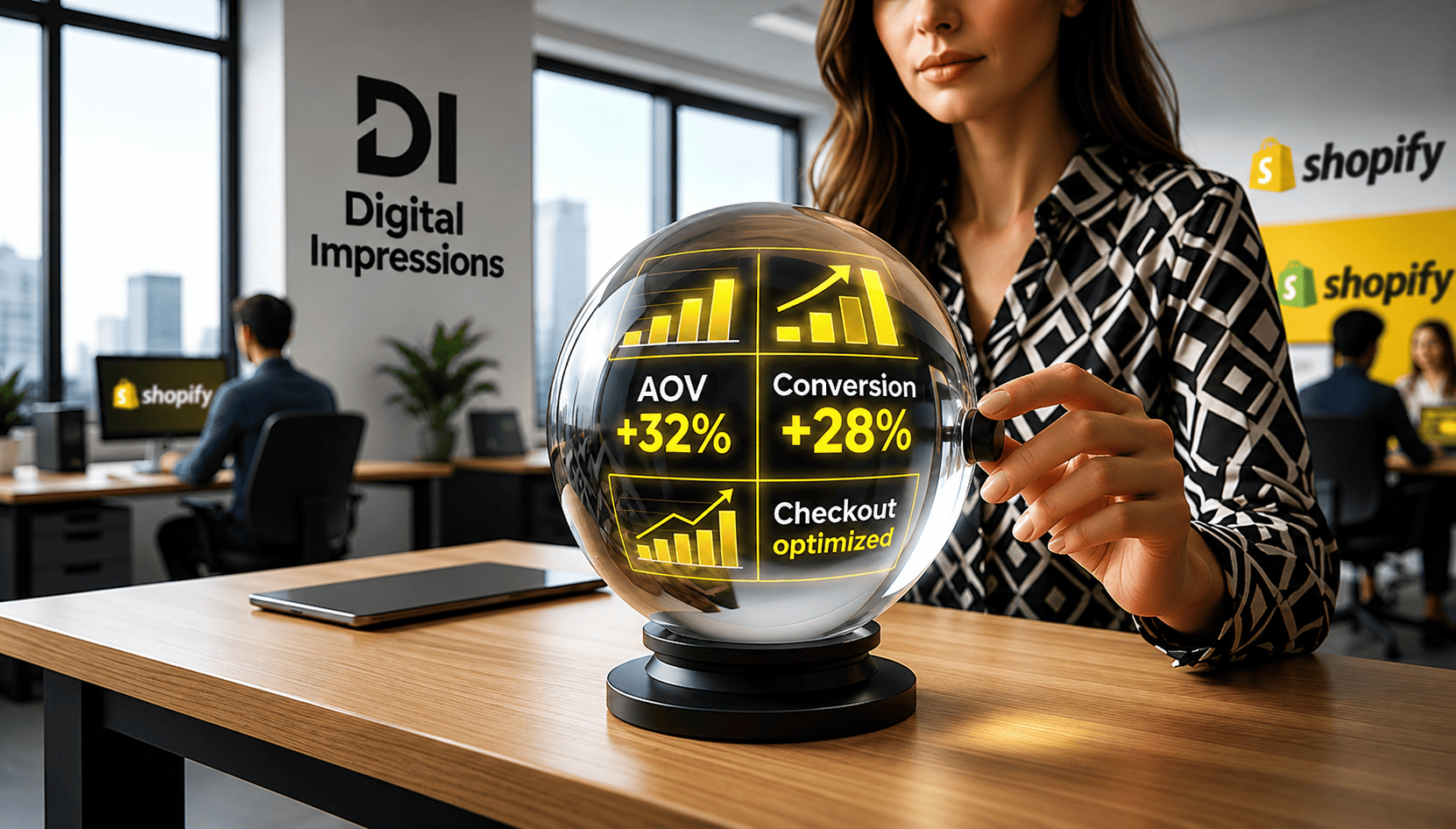
The e-commerce landscape is undergoing a silent, tectonic shift. For years, building a successful Shopify storefront was a matter of clean code, responsive design, and an intuitive checkout flow. Today, those elements are merely table stakes. The real battleground for modern fashion, lifestyle, and D2C brands has moved to data-driven personalisation and real-time optimisation.
At the centre of this revolution is Artificial Intelligence. AI has evolved from a futuristic marketing buzzword into the operational backbone of high-performance e-commerce. From micro-optimisations within the Shopify checkout ecosystem to hyper-personalised, predictive upselling, machine learning is fundamentally altering how consumers interact with online brands.
Yet, as the Shopify App Store fills with thousands of self-proclaimed “intelligent” plugins, brands face a new challenge: the illusion of simplicity. Plucking a tool off a shelf and activating it with a default configuration is no longer enough to win. True optimisation requires architectural synergy, data alignment, and expert orchestration. At Digital Impressions, we don’t just follow the AI trend; we architect it, ensuring that advanced algorithms serve distinct, measurable business objectives.
The New Pillars of AI-Enhanced Shopify Ecosystems
When integrated with strategic precision, AI tools don’t just sit on top of your Shopify store; they weave into the user journey, turning passive browsing into a dynamic, tailored experience. Here is how machine learning is actively rewriting the rules of major e-commerce touchpoints:
1. Smart Frictionless Checkout
The traditional checkout sequence is historically where high-intent traffic goes to die. Standard multi-step checkouts frequently suffer from cart abandonment due to cognitive friction, such as too many fields, rigid payment structures, or surprising delivery timelines.
AI changes this dynamic entirely. Modern machine learning protocols analyse a user’s behavioural footprint in real time, evaluating parameters like device type, referral source, typing cadence, and historical session patterns. By predicting intent, the system dynamically alters the checkout layout. It prioritises a user’s preferred native digital wallet (such as Apple Pay, Google Pay, or localised options like Shop Pay and UPI frameworks), dynamically autocompletes geographical address data based on minimal inputs, and calculates optimised, localised shipping windows on the fly. The result is a frictionless, split-second transition from desire to ownership.
2. Predictive Upselling and Cross-Selling
Static product recommendations (such as standard “You May Also Like” grids based on simple tag matching) are rapidly losing their effectiveness. Consumers now expect an ecosystem that understands their taste contextually.
Predictive AI engines track granular interactions across an entire catalogue. If a visitor hovers over a slub linen fabric or lingers on a specific botanical embroidered motif, the algorithm immediately recalibrates. It maps this behaviour against vast datasets of global consumer behaviour to serve highly context-aware cross-sells directly inside the mini-cart or via post-purchase confirmation screens. Instead of randomly suggesting a high-margin item, the system pitches a complementary product that balances the user’s explicit taste, budget profile, and immediate buying journey.
3. Hyper-Personalised Search and Merchandising
Traditional e-commerce search engines rely on exact keyword matches, leading to dead ends and zero-search-result pages if a customer misspells a word or uses descriptive language.
AI-powered semantic search utilises Natural Language Processing (NLP) to interpret the intent behind a query, rather than just the literal text. If a customer searches for “summer wedding evening wear,” the AI understands the context, automatically filtering for appropriate silhouettes, formal fabric profiles, and seasonal colour palettes. Furthermore, visual AI allows users to upload a photograph or a screenshot of an aesthetic they love, instantly pulling matching or lookalike items from your Shopify product catalogue.
Top AI Tools Catalysing Shopify Growth
| Shopify AI Platform | Primary Operational Focus | Core Objective & Business Benefit |
|---|---|---|
| Rebuy Engine | Post-Purchase Upselling & Dynamic Cart Scripts | Supercharges Average Order Value (AOV) by injecting highly personalised cross-sell recommendations directly into checkout extensions, side-carts, and post-purchase landing pages. |
| Klevu / Searchspring | AI Search, Merchandising, & Semantic Category Pages | Minimizes bounce rates and drives immediate product discovery by using NLP to predict user search intent and dynamically reordering collection grids based on real-time popularity. |
| Gorgias (AI Features) | Automated Customer Service & Sentiment Analysis | Drastically cuts down Customer Support Costs and initial response times by resolving tier-1 inquiries via automated, context-aware machine learning loops. |
| Loox / Okendo | AI-Driven Social Proof & Sentiment Aggregation | Collects, filters, and displays high-converting visual customer reviews, using AI sentiment analysis to highlight the most persuasive user generated content at crucial conversion points. |
| Signifyd | Predictive Fraud Protection & Risk Management | Evaluates checkout behavioral metrics instantly to approve legitimate international transactions while blocking malicious or fraudulent card attempts, completely shielding the merchant from chargebacks. |
The DI Effect: Strategic Curation Over Tool Clutter
While the toolset is incredibly powerful, plugging in apps haphazardly is a fast track to broken code, slow page speeds, and fragmented data. A store powered by seven different unoptimized machine learning loops often ends up fighting with itself, slowing down the browser, confusing the consumer with conflicting pop-ups, and muddying conversion data.
This is where the DI Effect comes into play. At Digital Impressions, our philosophy is anchored in a clear reality: We don’t just give a prompt; we are prompt.
Our contribution lies in turning raw software into tailored business systems. We approach Shopify AI through a clinical, objective-first lens. We do not implement technology for the sake of novelty; we implement it to solve specific commercial challenges.
Our deep e-commerce expertise enables us to audit your existing store architecture and craft a bespoke AI roadmap. We handle the heavy lifting:
- Architectural Integration & Performance Tuning: We ensure that heavy AI scripts are loaded asynchronously so they never compromise your Core Web Vitals or mobile page speed.
- Unified Data Flow: We map your AI ecosystems so your search app talks seamlessly to your email marketing engine and your upselling app, ensuring a single, cohesive profile for every customer.
- Algorithmic Calibration: A fashion brand requires entirely different algorithmic logic than a technical product brand. We calibrate machine learning models to respect your brand’s unique inventory velocity, margins, and seasonal cycles.
Through rigorous data modelling and performance marketing alignment, we bridge the gap between back-end infrastructure and front-end conversion. We transform standard software into a highly efficient, ROI-focused growth machine.
The Cost of Inaction: The Opportunity Loss of Skipping AI
In today’s hyper-accelerated market, opting out of AI integration or attempting to set it up without seasoned, expert oversight is no longer a conservative business choice; it is a rapid forfeiture of market share. The landscape has become highly competitive, and the gap between AI-driven storefronts and static websites is widening at an exponential rate.
Choosing to ignore AI-driven checkout and upselling models incurs a massive, compound opportunity loss across multiple operational fronts:
1. The Death of Average Order Value (AOV)
Without predictive upselling, you are leaving your product discovery entirely to chance. While your AI-powered competitors are automatically enticing customers with perfectly timed, contextually relevant add-ons that lift their transaction values by 20% to 30%, a static storefront is forced to rely on the customer proactively navigating back to a collection page. This translates directly into lost revenue on every single transaction.
2. Escalating Cart Abandonment and CAC
Customer Acquisition Cost (CAC) is at an all-time high across networks like Meta and Google. Paying premium rates to drive high-intent traffic to your Shopify store, only to lose them at the finish line due to a rigid, unoptimized checkout flow, is financially unsustainable. AI-driven checkout systems claw back lost revenue by intuitively simplifying the path to purchase. Skipping this optimization means willingly accepting depressed conversion rates while your ad spend drains into inefficient funnels.
3. The Burden of Scalability
As a brand grows, customer inquiries grow with it. Brands that fail to implement intelligent automation like Gorgias AI inevitably find themselves forced to scale their human support teams linearly, drowning in high overhead costs just to handle basic, repetitive queries. Meanwhile, agile, AI-optimised brands automate up to 50% of their routine customer service tickets, allowing their internal teams to focus on high-touch retention strategies and building real customer relationships.
Ultimately, trying to navigate this complex technological landscape without an expert partner introduces its own severe risks. Misconfigured apps conflict with one another, drag down page load speeds, and create jarring user experiences that break consumer trust.
The Road Ahead
The future of e-commerce belongs to brands that can deliver fast, seamless, and deeply personalised digital experiences. AI is the vehicle that makes this possible at scale, but strategic expertise remains the driver.
By marrying cutting-edge Shopify technology with the calculated, execution-focused engineering of Digital Impressions, your brand moves past generic automation. Together, we build agile digital storefronts designed to scale, capture market share, and consistently convert interest into loyalty.
You might also like

The Impressions Edit – September ’26
Expert Insights: How AI Is Changing E-commerce Marketing
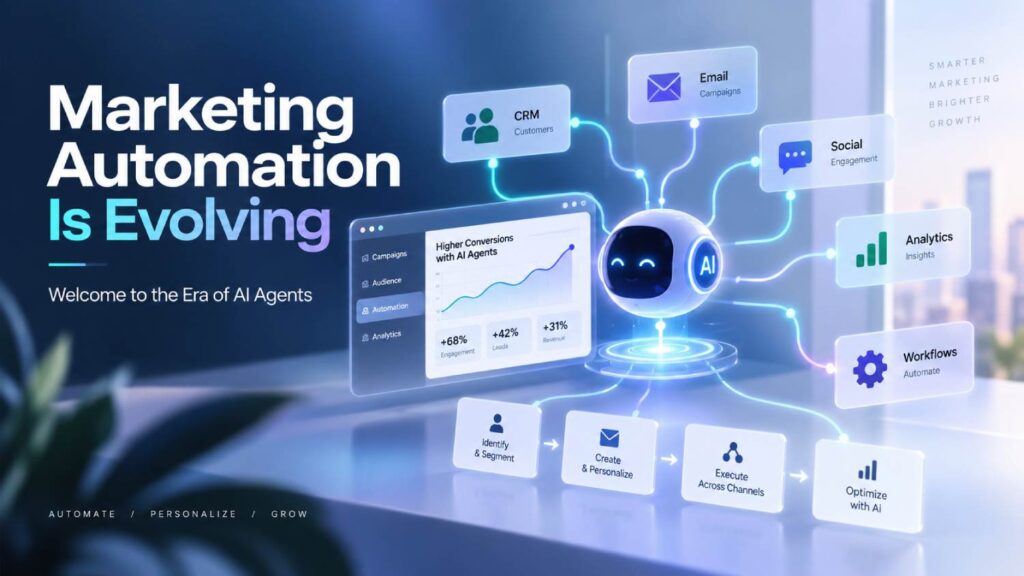
Marketing Automation Is Evolving: Welcome to the Era of AI Agents

AS SEEN ON









awards


Excellence
in Digital Marketing

Women CPO
of the year 2023

Transformational
Leaders to Watch

Most Trusted
Companies


-

UAE
DUBAI, UAE
+971-545502300 Digital Impressions (FZCO)
72819, IFZA Business Park, A1,
Dubai Silicon Oasis - 342001
UAE

-

INDIA
NCR
+91-9811348433 Digital Impressions (INDIA)
29-36 LGF, Charmwood Plaza,
Delhi NCR - 121009
India
-

INDIA
GURUGRAM
+91-9811348433 Digital Impressions (INDIA)
4th Floor, JMD MEGAPOLIS, FF-402,
Badshahpur Sohna Rd, Sector 48,
Gurugram, Haryana 122018
India
-

USA
ATLANTA, GEORGIA
Digital Impressions (USA)
1445 Woodmont Ln NW,
4515 Atlanta Georgia - 30318
United States


