
AI Won’t Replace Marketers, But Marketers Who Use AI Will Replace Those Who Don’t
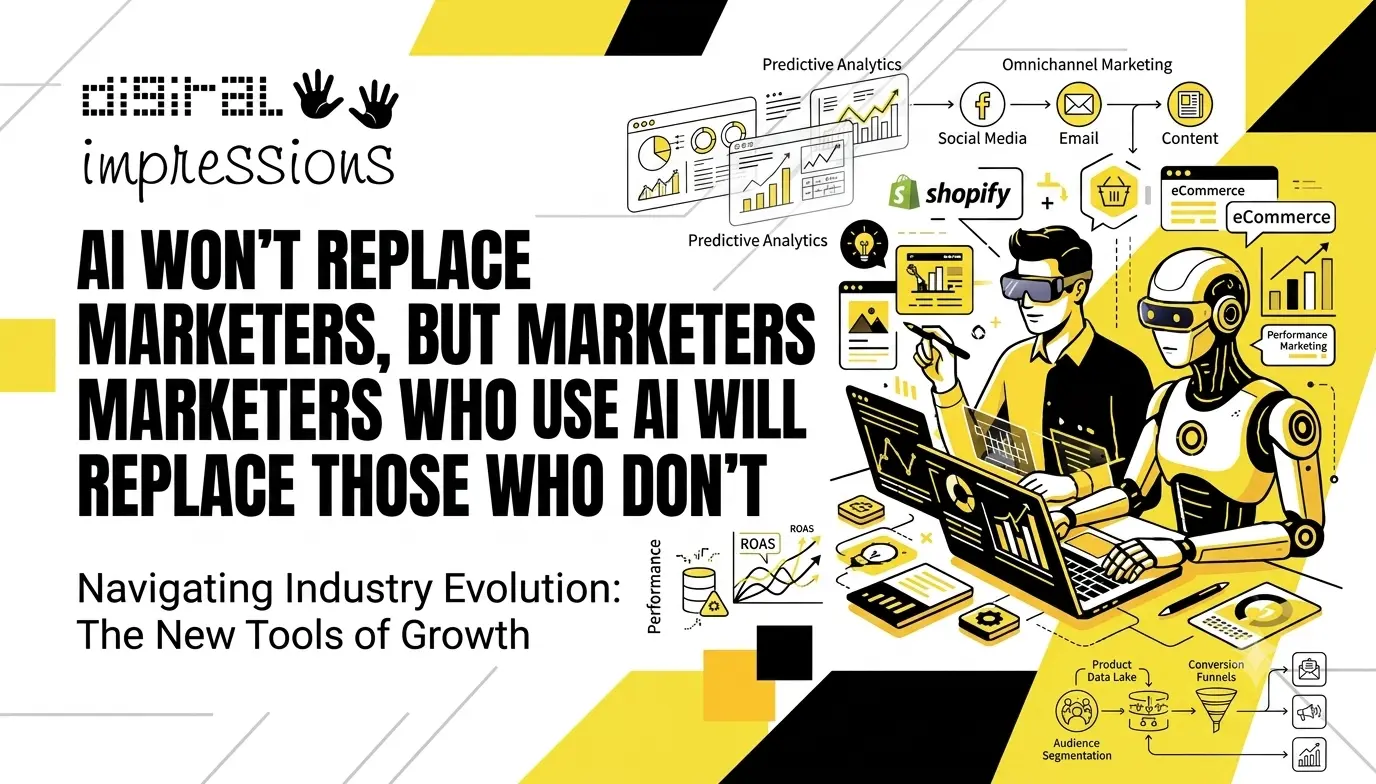
The collective anxiety of the modern marketing department can be distilled into a single, recurring nightmare: an empty room, a silent keyboard, and a lines-of-code entity rewriting a decade of consumer engagement strategies in three-tenths of a second. For years, the professional copywriter, the performance media buyer, and the D2C brand strategist stood on what they assumed was high ground, insulated from the automation waves that disrupted industrial manufacturing and administrative entry roles. Yet, as deep learning models began generating visual identities, drafting editorial copy, and autonomously reallocating multi-million-dollar ad spends, the narrative shifted from theoretical optimisation to existential crisis. The conversation in corporate boardrooms across Delhi, Dubai, and Atlanta is no longer about when the machine learning shift will happen; it is about who survives it.
But here is the foundational truth that the alarmist headlines consistently omit: an algorithm cannot feel the deep, instinctual pull of a brand narrative, nor can it understand why a specific cultural nuance turns a casual browser into a lifelong brand advocate. AI possesses an immense capacity to calculate probability, process massive audience datasets, and iterate variants at blinding speeds, but it lacks perspective. It does not possess a soul. The future of digital commerce does not belong to the cold, sterile outputs of unassisted artificial intelligence, nor does it belong to the analogue marketer who clings stubbornly to the legacy tactics of a decade ago. The future belongs to a new breed of professional: the augmented marketer. In this deep architectural shift, AI won’t replace marketers, but marketers who use AI will rapidly, systematically, and decisively replace those who don’t.
1. The Great Decentralisation: Mapping the Industry Evolution
To understand where the market is going, one must understand how it broke away from its legacy anchor points. For nearly two decades, digital marketing relied heavily on manual iteration and broad-stroke categorisation. A media specialist spent hours constructing manual demographic buckets, grouping audiences by simple parameters like age, geography, or basic interest tags. Creative teams drafted three or four distinct copy variations, hoping their collective intuition aligned with what the target market desired. Optimisation meant reviewing a campaign after seven days, manually adjusting bids, and adjusting creative sets based on historical data that was already fading into irrelevance.
This manual methodology fell apart as global consumer data expanded exponentially. Modern platforms now process millions of signals per second per individual user, tracking real-time micro-behaviours, dynamic contextual changes, and fluid intent shifts. For a human marketer to analyse these hyper-complex arrays using traditional methods is akin to navigating a supersonic flight with a paper map. The industry evolution forced an inflexion point: either automate the processing layer or drown in operational complexity.
Enter advanced neural networks and predictive analytics. Today, the initial infrastructure layer of marketing- ranging from foundational keyword indexing to cross-channel algorithmic audience mapping- is entirely driven by automated systems. The contemporary market moves too quickly for manual execution. Brands that operate under legacy frameworks are suffering from hyper-inflated acquisition costs, sluggish implementation velocity, and stale creative distribution. The market has separated into two clear paths: those bogged down by routine administration and those leveraging algorithmic intelligence to leapfrog ahead.
2. The DI Effect: Re-engineering the Agency Workflow
At Digital Impressions (DI), we recognised early that integration- not isolation- was the key to mastering this technological evolution. We didn’t view AI as a threat to our teams’ creativity; we adopted it as a framework to remove the weight of routine tasks. It’s not just AI; it’s the DI Effect. We don’t just give a prompt; we are prompt. By embedding machine learning models directly into our core pillars of Shopify e-commerce development and performance media buying, we transformed our structural workflows to deliver unparalleled results for lifestyle, fashion, and enterprise D2C brands.
Consider the architecture of a high-converting digital storefront. Traditionally, scaling an e-commerce platform required manual cross-merchandising setups, static product filtering, and uniform user journeys. At DI, we use predictive models to analyse hundreds of thousands of user interactions in real time. Our customised Shopify ecosystems dynamically recalibrate visual product hierarchies, offer hyper-personalised collection layouts, and present individual promotional sequences adjusted to the precise intent profile of the active consumer. We use advanced predictive analysis to examine audience behaviour, trending search terms, and competitor movements, ensuring our clients’ stores are optimised for conversion from the moment a link loads.
| Operational Function | The Legacy Agency Framework | The DI Augmented Approach (The DI Effect) |
|---|---|---|
| Audience Insights | Manual demographic configuration and static lookalike lists. | Real-time predictive intent clustering, mapping micro-behaviours across multiple endpoints. |
| Creative Production | Isolated production loops yielding low asset variation. | Data-backed creative structures generating hundreds of platform-specific variations hourly. |
| ROAS Optimisation | Scheduled end-of-week bid adjustments based on historic logs. | Continuous, programmatic allocation shifting budgets instantly to high-yield clusters. |
| Shopify UX Design | Fixed product grids and linear checkout paths for all users. | Contextually adaptive front-ends changing visual hierarchies dynamically based on real-time intent. |
3. The Anatomy of Performance Marketing in the AI Era
Performance media deployment has experienced the most structural upheaval in this new era. The era of the human day-trader media buyer- someone who sits inside an ad manager platform twisting digital dials all afternoon- is rapidly drawing to a close. Modern ad platforms operate on deep-learning neural engines that function best when given deep data pools and structural autonomy, rather than micro-management.
The modern media expert’s value does not reside in manually adjusting bids by five per cent at midnight. True value lies in cross-channel data orchestration, ecosystem architecture, and predictive unit-economic calculations. At Digital Impressions, we structure our 360-degree performance marketing strategies (paid, organic, and influencer components) around this understanding. Our teams build comprehensive data loops that feed clean first-party information back into campaign algorithms, optimising performance tracking across Meta, Google, TikTok, and Snapchat.
By leveraging automation to monitor budget health and flag tracking anomalies, our strategists focus on creative direction, positioning hooks, and comprehensive brand roadmaps. We don’t guess what will convert; we build robust testing frameworks where machine learning engines iterate dozens of messaging variations, while our human experts curate the qualitative guardrails that preserve the premium identity of the brand. The result is a highly efficient operational engine that lowers consumer acquisition costs while maintaining real brand value.
4. Why the Human Variable is Irreplaceable
If artificial intelligence can write sentences, generate pictures, balance budgets, and adjust digital storefront structures, what is left for the professional human marketer? The answer is simple yet definitive: everything that truly matters.
An algorithm functions by looking backwards. It scans vast mountains of historic text, visual content, and historic consumer actions to predict the mathematical probability of what should come next. Because it relies fundamentally on existing data sets, pure AI is fundamentally incapable of true creative disruption. It cannot engineer a sudden cultural shift, it cannot create an entirely new aesthetic movement, and it cannot understand the complex, occasionally irrational emotional motivations that dictate human luxury buying behaviour.
Consider a premium fashion label launching a collection inspired by historical textiles or modern minimalism. An AI engine can analyse the colour trends that performed best last quarter and output a generic copy variant matching that tone. What it cannot do is weave a deeply human narrative of craftsmanship, heritage, or identity that challenges the current market consensus and makes a consumer proud to wear that label. The human variable provides the emotional anchor, the strategic vision, and the ethical guardrails. When you strip away human empathy, marketing becomes a series of calculations, and consumers always walk away from cold calculations.
5. The Immediate Cost of Inaction: The Competitive Divide
The gap separating augmented marketing teams from legacy operations is expanding rapidly. This isn’t a gradual transition that allows brands years to comfortably acclimate. It is a compounding competitive divide. A brand operating with an augmented workflow can conceptualise, build, test, and deploy a global e-commerce acquisition strategy in the time it takes a legacy team to host an initial alignment meeting.
When an agency leverages AI to handle structural data formatting, automated inventory syndication, and immediate multivariate testing variations, it frees up hundreds of operational hours. Those hours are reinvested directly into perfecting the product experience, gathering deep customer qualitative insights, and engineering bold, memorable creative concepts. Meanwhile, legacy brands remain bogged down by routine management, watching their margins drop as their acquisition costs rise. The cost of avoiding technological evolution isn’t just an inefficient workflow- it’s losing your position in the market.
6. Elevating Your Brand: The Path Forward
Embracing the future requires stepping away from functional, comfortable spaces and rethinking how your entire marketing organisation handles execution. To build a highly resilient brand ecosystem, consider implementing the following foundational framework:
Audit Your Technical Velocity: Measure the precise time it takes your marketing engine to transform a new market insight into a deployed live creative across all standard conversion networks. If the loop takes longer than 48 hours, legacy processes are holding your team back.
Unify Store Performance and Media Strategy: Break down the structural walls between your development team and your performance media experts. Ensure your digital storefront’s user experience adjusts dynamically to match the specific intent signals driving your media acquisitions.
Cultivate Strategic Orchestrators: Retrain internal teams to transition away from basic manual execution roles. Incentivise them to master data translation, premium creative direction, and advanced cross-functional system design.
The digital landscape will never move slower than it does today. The tools will continue to evolve, platforms will keep shifting their target parameters, and consumer behaviours will continue to change. The question facing every brand leader is simple: will you continue to manage your growth with legacy frameworks, or will you partner with a team that treats technological innovation as an everyday standard?
Look closely at your current conversion campaigns, your site speed metrics, and your content performance lines. Are you truly running an optimised, future-ready growth ecosystem, or are you paying a team to manually turn dials that automated systems could handle in milliseconds? If you suspect your current strategy is falling behind the curve, let’s change the dynamic. Contact Digital Impressions today, and let’s explore how we can leverage the DI Effect to build a high-performance roadmap for your brand.
As the algorithms rewrite the rules of global trade, a critical question remains for your brand: When the dust settles on this technological evolution, will your company be the one driving the automation, or will you be the one replaced by it?
You might also like

The Impressions Edit – September ’26
Expert Insights: How AI Is Changing E-commerce Marketing
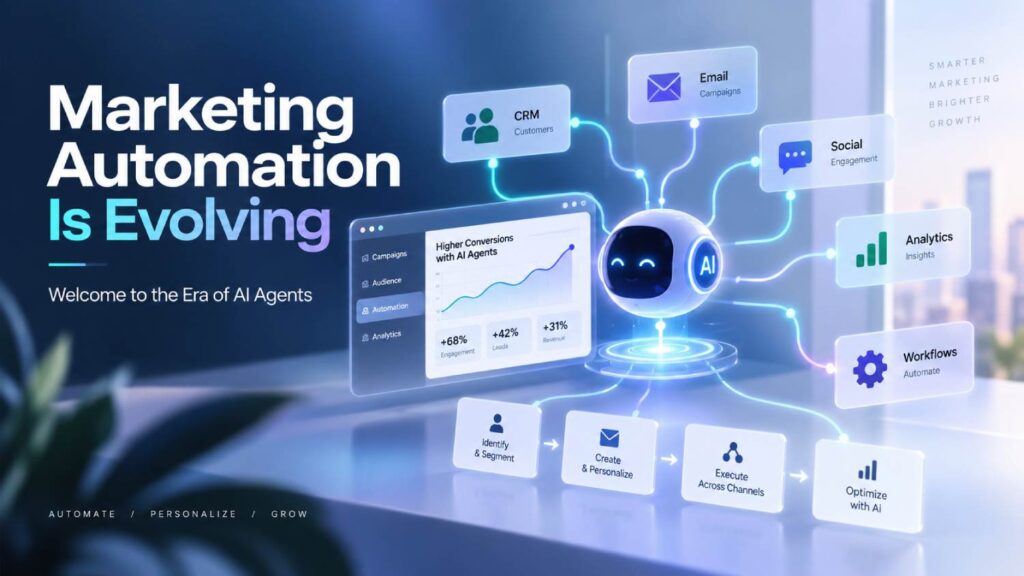
Marketing Automation Is Evolving: Welcome to the Era of AI Agents

AS SEEN ON









awards


Excellence
in Digital Marketing

Women CPO
of the year 2023

Transformational
Leaders to Watch

Most Trusted
Companies


-

UAE
DUBAI, UAE
+971-545502300 Digital Impressions (FZCO)
72819, IFZA Business Park, A1,
Dubai Silicon Oasis - 342001
UAE

-

INDIA
NCR
+91-9811348433 Digital Impressions (INDIA)
29-36 LGF, Charmwood Plaza,
Delhi NCR - 121009
India
-

INDIA
GURUGRAM
+91-9811348433 Digital Impressions (INDIA)
4th Floor, JMD MEGAPOLIS, FF-402,
Badshahpur Sohna Rd, Sector 48,
Gurugram, Haryana 122018
India
-

USA
ATLANTA, GEORGIA
Digital Impressions (USA)
1445 Woodmont Ln NW,
4515 Atlanta Georgia - 30318
United States


